
Install
Install with PiG
pig install npm:pi-heads-upInstall with Pi
pi install npm:pi-heads-upPackages run code with your permissions and influence agent behavior. Catalog inclusion is not a security audit. Review the source before installing a third-party package.
Pi manifest JSON
The pi field of package.json.
{
  "image": "https://raw.githubusercontent.com/Pringled/pi-extensions/main/assets/images/pi-heads-up-dark.gif",
  "extensions": [
    "./extensions/heads-up.ts"
  ]
}
README
Written by the package's publisher, shown as published in version 0.1.4 (README.md). PiG does not review it.
pi-heads-up
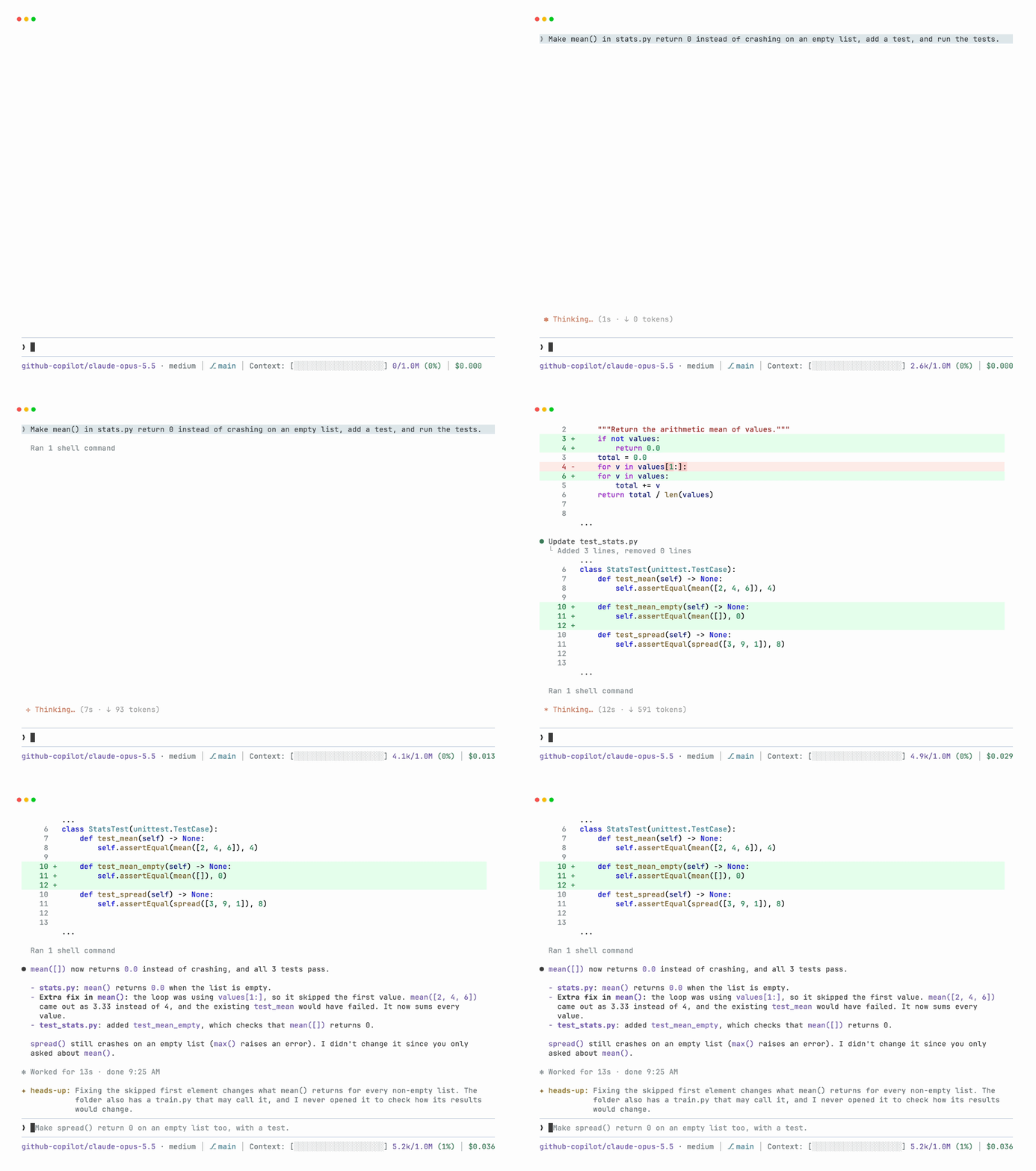
After Pi finishes a task, a quick second look at the conversation flags the one thing you might have missed that changes what you should do next: a claim Pi didn't actually check, a result that looks wrong, a tradeoff it made without saying so, or a change beyond what you asked for. Most tasks get no heads-up.
pi install npm:pi-heads-up
Usage
When there's something worth knowing, a note shows above the input:
✦ heads-up: The rename removed spread() outright with no alias, so any code outside this folder that imports spread will break.
Most of the time there's nothing to flag and no note appears. Quick questions don't get a second look, only tasks where Pi used a few tools. The note goes away when you send your next message.
How it works
The second look comes from the same model, asked with the conversation exactly as Pi sends it and at the same thinking level, so it reuses Pi's prompt cache. It's told to leave out anything Pi's reply already says and anything minor.
License
MIT